AI Receptionist vs Answering Service vs Voicemail: An Honest Comparison
A straight comparison of voicemail, human answering services, and AI receptionists: cost, coverage, escalation, and where each one genuinely wins.
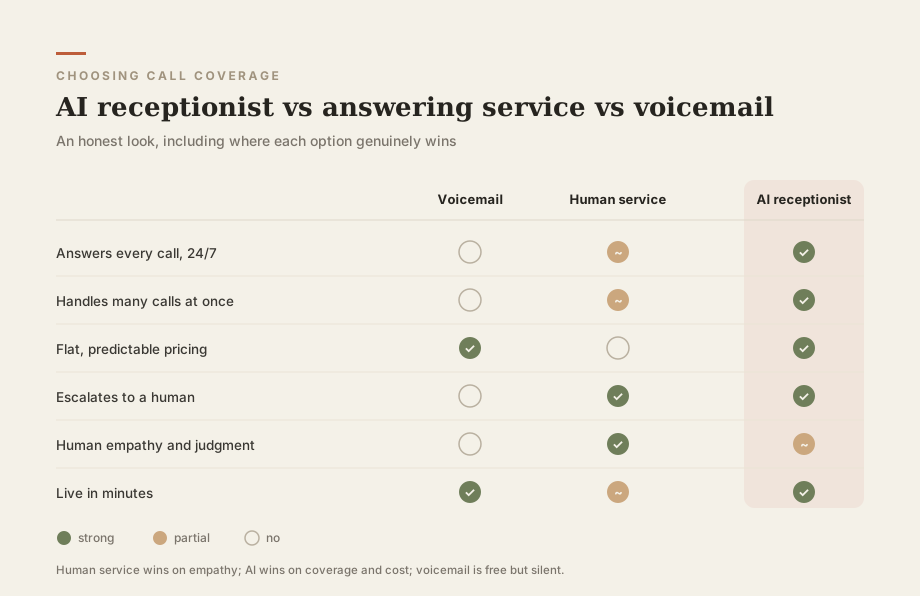
If you are deciding how to handle your business calls, here is a straight comparison, including where each option genuinely wins.
Quick answer: Voicemail is free but silent, because most callers will not leave a message. A human answering service wins on empathy and judgment but usually charges per call or per minute and works limited hours. An AI receptionist answers instantly 24/7, handles many calls at once, sets up in minutes, and typically costs a flat monthly fee. Its limit is deep empathy edge cases, which is why the best ones escalate to a human. For most businesses losing leads to unanswered calls, an AI receptionist with human escalation is the most economical fix.
What are the three real options?
Most small businesses handle inbound calls one of three ways: let them hit voicemail, pay a human answering service, or use an AI receptionist. Each is valid in the right situation. Here is the honest comparison, with no pretending one option is perfect.
| Criteria | Voicemail | Human answering service | AI receptionist |
|---|---|---|---|
| Answers every call, 24/7 | No | Partial | Yes |
| Handles many calls at once | No | Partial | Yes |
| Flat, predictable pricing | Yes (free) | No (per call or minute) | Yes |
| Escalates to a human | No | Yes | Yes |
| Human empathy and judgment | No | Yes | Partial |
| Live in minutes | Yes | Partial | Yes |
No option wins on everything. The right choice depends on what your business actually needs.
Where does each option genuinely win?
Voicemail is free and fine for very low call volume with patient callers. Its weakness: roughly 8 in 10 callers who reach voicemail hang up without leaving a message.
A human answering service wins where it matters most, empathy and judgment. A trained person can read a distressed caller and handle the genuinely unusual. The trade offs are cost and capacity: typically per call or per minute pricing (industry ranges commonly run from a few hundred to over a thousand dollars a month), unpredictable bills, limited hours, and one call at a time.
An AI receptionist wins on coverage and economics: it answers instantly, 24/7, handles simultaneous calls, sets up fast, and usually runs a flat monthly price (commonly tens to low hundreds of dollars). Its honest limit is deep empathy edge cases, which the best tools route to a human.
How should you choose?
Ask four questions. How many calls do you miss now, especially after hours? What does one lost customer cost you? Do you need predictable monthly costs? And when a call needs a human, what happens? That last one is the quiet differentiator. The strongest setups are not "AI or human." They are AI with a human escalation path, which is why hybrid models tend to score highest on customer satisfaction.
Watch the pricing model, not just the price
Per minute and per call pricing looks cheap on a slow month and punishes you on a busy one. Your most successful months become your most expensive. A flat monthly price does the opposite: it is predictable and does not penalize growth. When you compare, model a busy month, not an average one.
Questions to ask any vendor
Before you sign up, get straight answers to five questions. How am I billed, flat monthly or per call and per minute that spikes when I am busy? What happens when a call needs a human, a real escalation path or does the AI guess? Where do answers come from, only my information or the model's general knowledge? How long is setup, minutes or a project? What channels are covered, just voice or also chat, SMS, and messaging?
If the pitch leans on labels like chatbot, AI agent, or conversational AI, our field guide to chatbots, AI agents, and conversational AI explains what each one actually is, and which questions cut through the jargon.
Which industries should compare these options closely?
Any business where the phone drives revenue and volume is unpredictable:
- Computer and IT repair and field service techs (often on site, cannot answer).
- Home services (pest control, HVAC, plumbing, electrical) with after hours emergencies.
- Salons, spas, and clinics with appointment driven demand.
- Law firms, where one missed intake is a major case.
- Auto repair and ecommerce support with spiky, time sensitive inquiries.
Case study: Geek Square, Greater Toronto Area (on site computer repair)
Geek Square provides same day, on site computer repair across the GTA: Toronto, Vaughan, Markham, Richmond Hill, and beyond. Their model is the textbook trap in this comparison. The technician who would answer the phone is the same person who is at a customer's home fixing a machine, sometimes an hour's drive away. Voicemail loses the lead, because a person with a dead laptop calls the next "computer repair near me" result, and a per minute answering service that does not understand the work cannot qualify or book it well.
Geek Square's Zalena assistant answers every call the moment it comes in, even mid job. It qualifies the problem (slow PC, virus removal, data recovery, networking), books the on site visit, and captures the address and device details, all at a flat monthly price with no per minute surprises on busy days. Anything that needs the technician's judgment is escalated. It is the AI with human escalation model this comparison points to, applied to a one van, high skill business.
FAQ
Is an AI receptionist cheaper than an answering service? Usually yes for predictable budgeting. AI receptionists commonly use a flat monthly fee, while human answering services typically bill per call or per minute, which spikes during busy periods.
Can an AI receptionist transfer to a human? Yes. The best ones escalate sensitive, complex, or unusual calls to a person, combining AI coverage with human judgment.
Is voicemail good enough for a small business? Only at very low call volume. Most callers who reach voicemail hang up without leaving a message and may call a competitor.
What is the best option overall? There is no universal winner. Match the tool to the calls you are missing. For most businesses losing after hours and overflow calls, an AI receptionist with human escalation is the most economical fix.
Part of our series on small business phone strategy. Start with the overview, Press 1 for English: What My Insurance Company Taught Me About AI.
Sources
- 411 Locals, small business call answer study (context for missed call rates).
- Hiya, State of the Call (voicemail abandonment).
- Industry pricing ranges for human answering services versus AI receptionists (directional; varies by provider and volume).
Get new posts in your inbox
Notes on AI assistants, customer experience, and what's working for the small businesses building on Zalena. No spam.