AI Just Learned to Finish the Job. Here's What That Means for Your Business
Google's new AI model can finish multi-step work, not just answer questions. What the Gemini 4 launch means for small business owners, and 3 things to do now.
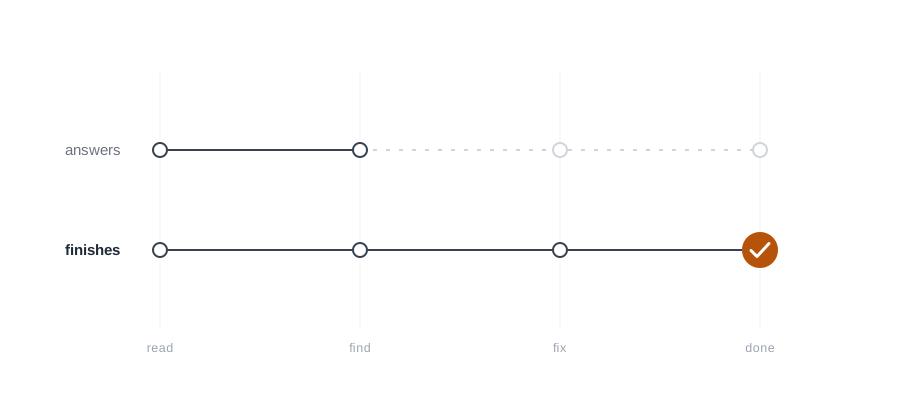
If you run a clinic, a law office, a restaurant or a repair shop, you've probably stopped reading AI launch news, and I don't blame you. Most of it is written for engineers. But Google released a new model on October 13 (Gemini 4 Argon), and one change in it matters for a small business: AI is getting better at finishing a piece of work, not just answering a question about it. It sounds like a small difference. In practice it's most of what you'd actually pay for.
What happened this week, in plain terms
Google made its newest model available to developers and to paying Gemini subscribers. The headline demos were about science and robotics (it helped a humanoid robot learn cornhole well enough to sink seven shots in a row). The example worth your attention is quieter. Someone gives the Gemini app a folder of project files, and it turns them into a clean proposal for a client, emails it, and sets up a scheduled task to do the same thing the next time a request comes in.
That isn't a chatbot answering "what should I charge for this job?" It's the pile on your desk on Sunday night, handled. Every big AI company is now chasing the same thing: software that takes a messy job with several steps and carries it through to the end.
Answering is cheap. Finishing is what you pay staff for.
The most useful test of the new model didn't come from Google. It came from Box, a company that stores documents for businesses, which ran it through the kind of slow, fiddly work office staff do all day. Two of their results apply to almost any small business:
- The follow-through test. Given a patient's care plan, both the new and the old model spotted a dangerous drug interaction. Only the new one went back and took the offending drugs out, so the final plan matched what it had found. It's the difference between an employee who notices the invoice is wrong and one who notices and fixes it before it goes out. You know which one you'd promote.
- The missing-data test. Asked to review energy use at a data center, the new model noticed that one smart meter's log simply stopped in November. The older model often reported the records as complete. If you've ever been handed a report that looked finished and wasn't, you know why this one matters.
So the question to ask about an AI tool has changed. It used to be "can it answer my customers' questions?" Now it's "does it finish the job, and does it notice when something is off?" (If the line between a chatbot and an agent still feels fuzzy, this field guide sorts it out.)
Three things to do about it (none of them involve learning to code)
- Pick one job, not "AI." Don't buy a tool and then go looking for uses. Pick the task that eats your evenings (quoting, after-hours enquiries, booking appointments, chasing no-shows) and judge any tool on whether it can finish that one job without you.
- Judge cost per finished job, not price per month. Prices in this market move constantly. Google's developer rates for the new model double on December 1, for example. What stays useful is a simpler comparison: what does a completed booking or a drafted quote cost you in staff time today, and what would it cost with the tool?
- Make it prove the boring stuff. Before you trust any AI with customers, test it on your edge cases: a city you don't serve, a service you don't offer, a question with a detail missing. The costly failures usually aren't wrong answers. They're confident answers to questions the tool should have flagged.
That last one is personal for us. The hardest engineering on our own product isn't making it sound natural. It's getting it to say "sorry, we don't serve Peterborough" when you don't serve Peterborough.
Where this leaves your front desk
The big AI labs will keep leapfrogging each other every few months. That's their race, not yours. Yours is simpler: businesses that hand repetitive front-desk work to software that actually finishes it will respond faster than the ones still letting after-hours calls go to voicemail.
That's the job Zalena was built for. It's a voice and chat assistant that answers your phone and website around the clock, books the appointment, and knows what your business does and doesn't do. At Geeksquare, a computer repair shop in the GTA, about 30% of chat conversations come in after hours, and the assistant turns 4 to 5 conversations a week into qualified bookings. If you'd rather hear it than read about it, call our live demo line at 437-524-1147.
Plans start at $29 a month, about a dollar a day. Questions? hello@zalena.ai
Get new posts in your inbox
Notes on AI assistants, customer experience, and what's working for the small businesses building on Zalena. No spam.