The Real Cost of Missed Calls for Small Businesses (2026 Data)
Small businesses answer only about 38% of inbound calls. Here is what missed and after hours calls really cost, and how to capture them safely with AI.
Most owners worry about an AI assistant making a mistake. Meanwhile, a bigger loss happens every day, in silence: the calls that never get answered at all.
Quick answer: Small businesses answer only about 38% of their inbound calls, which means roughly 6 in 10 callers never reach a person (411 Locals study of 85 businesses across 58 industries). Most do not leave a voicemail, and many call a competitor instead. The worry that an AI assistant will say the wrong thing is real but small. The daily, certain loss to voicemail is far larger. The safe fix is a narrowly scoped AI assistant that answers only from your own information and hands sensitive calls to a human.
How many calls do small businesses actually miss?
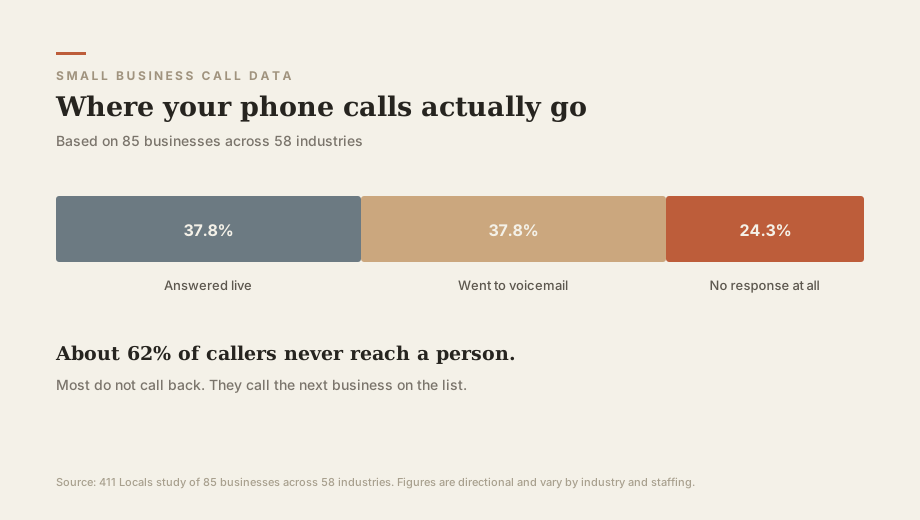
It is not that owners do not care. It is that one or two people cannot physically catch every call while serving a customer, working a job, on hold with a supplier, or asleep. A widely cited 411 Locals study monitored 85 businesses across 58 industries and found only 37.8% of calls were answered by a live person. Another 37.8% went to voicemail and 24.3% got no response at all. Across other datasets, small and medium businesses appear to miss anywhere from a quarter to over half of their calls, depending on staffing and hours.
| Where the call goes | Share of calls |
|---|---|
| Answered by a live person | 37.8% |
| Went to voicemail | 37.8% |
| No response at all | 24.3% |
Across 85 businesses in 58 industries, nearly two in three callers never reached a person. Figures are directional and vary by industry, staffing, and how a missed call is defined.
What does a missed call really cost?
More than one sale. Phone calls are among the highest intent leads a local business gets, and for home services businesses they convert to revenue many times more often than web form leads (Invoca call conversion research). But callers do not wait. Industry data from Hiya and others shows the large majority who reach voicemail never leave a message, roughly 85% never call back (Aircall), and a big share call the next business on the list instead. You can even pay twice: once for the ad that made the phone ring, and again for the customer who hit voicemail and booked elsewhere. Speed matters too. Harvard Business Review research on lead response found that contacting a lead within five minutes makes you far more likely to connect than waiting even half an hour.
Is an AI assistant risky? Will it say the wrong thing?
This is the honest objection, and it deserves a straight answer: a badly built bot can cause real problems. But weigh the two risks side by side. On one side is a rare, avoidable AI mistake. On the other is a large, certain, daily loss of ready to buy customers to silence.
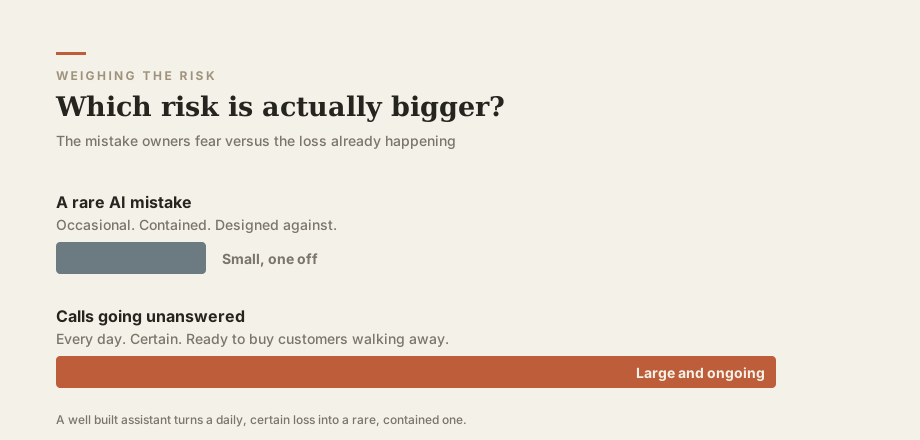
The worry is real. It is just aimed at the smaller of the two risks.
How do you capture every call without the risk?
Do not hand your business to an open ended oracle. Use an assistant with a narrow, well defined job: answer common questions from your own information, capture every caller's name, number, and reason for calling, and book or route the appointment. Then withhold one thing deliberately: never let it commit to anything it cannot verify. No invented prices, no exceptions, no promises. Anything outside that lane is a trigger to bring in a human, not something to improvise around.
That is how Zalena is built. It answers calls, texts, and messages across the channels your customers use (phone, chat, SMS, WhatsApp, Instagram) around the clock, comes preconfigured for trades like dental, legal, home services, and restaurants, hands off to a human whenever a call needs one, and runs at one flat monthly price with no per minute meter.
Which industries lose the most to missed calls?
The problem is sharpest where calls are urgent, high value, and often after hours:
- Pest control, HVAC, plumbing, electrical, roofing, and garage door services: emergencies that cannot wait until morning.
- Computer and IT repair: technicians on house calls cannot answer the next ringing phone.
- Auto repair and towing: a stranded caller phones the next shop in seconds.
- Dental, medical, and veterinary clinics: new patient and urgent calls.
- Law firms: one missed intake call can be a five figure case.
- Salons, spas, and restaurants: bookings and reservations placed after hours.
Case study: Pest Mite, Brampton (24/7 pest control)
Pest Mite is a family run pest control company serving Brampton, Mississauga, Toronto, and Etobicoke, built on referrals and a reputation for same day and 24/7 emergency response. But emergencies do not keep business hours. A homeowner who finds bed bugs at 11 p.m., or a restaurant manager facing a roach problem before a health inspection, calls one exterminator after another until someone picks up. Every after hours call that hit voicemail was a job, and a long term customer, at risk of going to a competitor.
With a Zalena assistant on the line, every call is answered in seconds, day or night. The caller's name, address, and pest problem are captured. Routine questions about service areas, the approach to pricing, and the 100 day guarantee are answered from Pest Mite's own information. Genuine emergencies are flagged for the on call technician, and anything unusual is routed to a person. The phone becomes a booking engine instead of a leak, without adding front desk staff.
FAQ
How many calls do small businesses miss? A 411 Locals study of 85 businesses across 58 industries found only about 37.8% of calls were answered by a live person, with the rest going to voicemail or no response, so roughly 62% never reach a person.
Is an AI phone assistant safe for a small business? Yes, when it is scoped correctly. A safe assistant answers only from your own information, refuses to invent prices or policies, and escalates sensitive calls to a human.
Do people call back if they reach voicemail? Mostly no. Industry data shows the large majority who reach voicemail hang up without leaving a message, and many call a competitor instead.
Will an AI assistant replace my staff? No. It handles the calls your team cannot reach (after hours, peak times, when everyone is busy) and hands the rest to a person.
Part of our series on small business phone strategy. Browse all posts.
Sources
- 411 Locals, small business call answer study (85 businesses, 58 industries): https://411locals.us/small-business-owners-dont-answer-62-of-phone-calls/
- Invoca, home services call conversion research (phone leads versus web form leads).
- Hiya, State of the Call (voicemail abandonment); Aircall (callback behavior).
- Harvard Business Review, "The Short Life of Online Sales Leads" (lead response time).
Get new posts in your inbox
Notes on AI assistants, customer experience, and what's working for the small businesses building on Zalena. No spam.