Why Dental Practices Lose New Patients to Voicemail (and How to Fix It)
Dental practices miss roughly 1 in 4 calls during business hours, and most callers never call back. Here is the data, and how to stop losing new patients.
New patient calls are some of the highest value calls your practice gets. They are also the ones most likely to go unanswered.
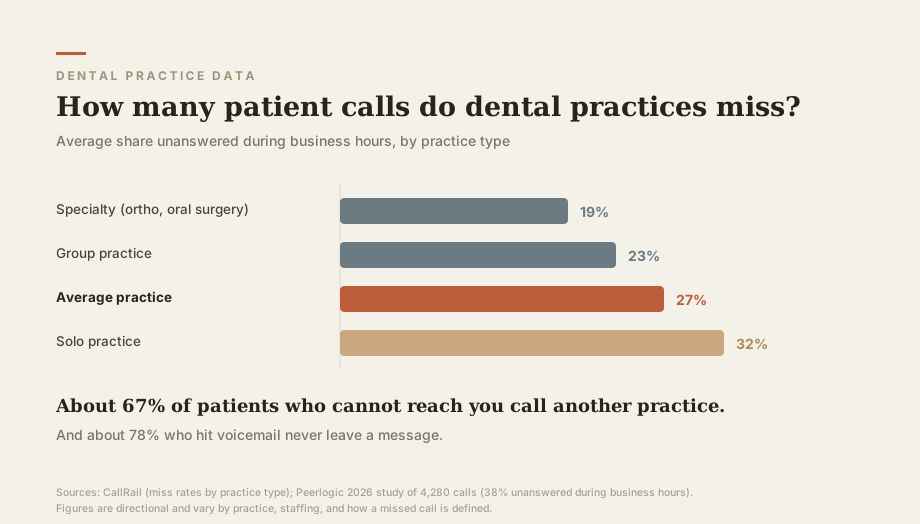
Quick answer: The average dental practice misses roughly 27% of incoming calls during business hours (some studies put it as high as 38%), and over 70% of dental appointments are still booked by phone. Most callers who hit voicemail do not leave a message, and about 67% simply call another practice. An always on AI assistant that books appointments and routes clinical or urgent calls to staff turns "will anyone answer?" into "yes."
Why does a busy front desk miss new patient calls?
Because your front desk is already doing three jobs at once. They are checking in a patient, on hold with an insurer, or helping someone chairside when the next call comes, and after 5 p.m. they are gone. The average office takes 40 to 60 calls a day, and a single receptionist can handle one at a time. While they are on that call, the rest ring out. New patients call when it is convenient for them: evenings, lunch breaks, weekends. That is exactly when the office is hardest to reach.
| Practice type | Calls missed during business hours |
|---|---|
| Specialty (orthodontics, oral surgery) | about 19% |
| Group practice | about 23% |
| Average practice | about 27% |
| Solo practice | about 32% |
Sources: CallRail analysis (miss rates by practice type); Peerlogic 2026 study of 4,280 calls across 26 practices (38% unanswered during business hours). Figures are directional and vary by practice.
How costly is one missed new patient call?
This is not a missed message. It is a missed relationship. Industry estimates put a new patient's first visit around CA$250 to CA$350 and lifetime value in the thousands. Worse, you may have paid for the ad that made the phone ring, then lost the lead to a recorded greeting. About 78% of callers who reach voicemail leave no message, and roughly 67% call a competing practice instead. Those losses never show up in your schedule. They are invisible.
What actually fixes it for a dental practice?
Not "answer more calls," because your team is maxed out. The fix is making sure every call gets answered, including the ones your desk cannot reach. A purpose built dental assistant should:
- Answer instantly, 24/7, and handle several calls at once, so a busy Monday morning does not bury new patients.
- Book directly into the scheduling flow your team already uses, instead of leaving messages to transcribe later.
- Capture the caller's details and reason, so staff pick up with full context.
- Know its limits, routing clinical, urgent, or insurance sensitive questions to a person.
- Cost a flat, predictable price rather than a per minute meter that punishes a busy week.
Zalena comes preconfigured for dental practices, so it speaks your world out of the box and hands off to your team when a call needs a human.
Run the numbers for your own practice
You do not need a study to see the cost. Your own schedule will show it. Take the new patient calls you get in a typical week, estimate how many arrive after hours, during lunch, or while the desk is slammed, and multiply the ones that slip away by a new patient's lifetime value. Set that against the flat monthly cost of simply answering them. For most practices the comparison is not close, which is why "we will just call them back" quietly loses to "someone picked up."
Which practices benefit most beyond general dentistry?
The same after hours, high intent call pattern hits adjacent clinics:
- Orthodontic and pediatric dental practices (consultation driven, parent schedules).
- Dermatology and med spas (high value elective bookings).
- Optometry and vision clinics.
- Physiotherapy, chiropractic, and veterinary clinics.
The same playbook also applies to law firms, home services, and restaurants: high intent calls, easy to miss, expensive to lose.
FAQ
What percentage of calls do dental practices miss? The average practice misses roughly 27% of calls during business hours. Figures across studies range from about 19% for specialty practices to 32% for solo practices, and some analyses report up to 38%.
Can an AI receptionist book dental appointments? Yes. A well built assistant books directly into your scheduling flow, captures patient details and reason for calling, and routes clinical or urgent matters to your staff.
Will it handle insurance or clinical questions? It answers routine questions from your own information and escalates anything clinical or insurance sensitive to a human, rather than guessing.
Is it worth it for a small practice? Given that one new patient can be worth thousands in lifetime value, recovering even a few missed new patient calls a month typically outweighs the flat monthly cost.
Part of our series on small business phone strategy. Start with the overview, Press 1 for English: What My Insurance Company Taught Me About AI.
Sources
- CallRail, analysis of dental practice missed call rates by practice type.
- Peerlogic (2026), study of 4,280 inbound calls across 26 dental practices.
- ADA Practice Transitions and Dental Economics, new patient call answer rates and call volumes.
- 411 Locals, small business call answer study (cross industry context).
Get new posts in your inbox
Notes on AI assistants, customer experience, and what's working for the small businesses building on Zalena. No spam.